

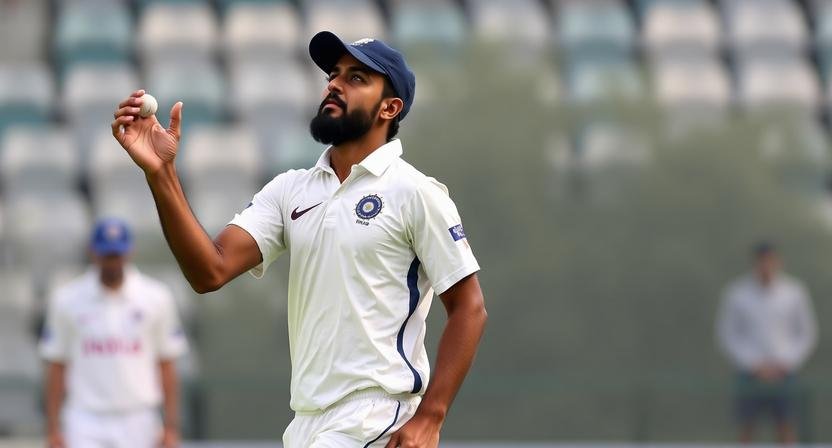
Mohammed Shami is one of the most experienced and effective fast bowlers in international cricket today. Known for his ability to extract movement off the pitch and deliver consistently at high pace, Shami has been a cornerstone of India’s pace attack across formats for over a decade.
However, his international career has faced significant disruption due to injuries and recurring fitness concerns. This article provides a comprehensive, up‑to‑date look at Shami’s injury history, current fitness status, impact on his selection for India, and prospects for a comeback.
Injuries are a central context in Shami’s recent career narrative. While fans and pundits once expected him to remain a regular in the Indian lineup, a series of fitness setbacks has kept him on the periphery of national selection.
Read Also: Mohammed Shami Injury Update: Latest News on India Pacer
The Rise of a Fast Bowling Great
Mohammed Shami debuted for India in 2013 and quickly made a name for himself with his ability to swing the ball both ways and bowl incisive spells in all formats. Over the years, he has taken crucial wickets in Tests, ODIs, and T20Is, and reached significant milestones, including becoming the fastest Indian to 200 ODI wickets. His performance in major ICC events, especially the 2023 ODI World Cup where he was India’s leading wicket‑taker, cemented his reputation as a world‑class bowler.
Shami’s skill set—precise seam positioning, late movement, and adaptability across conditions—made him indispensable. Yet the same mechanical demands that made him successful also increased the strain on his body, notably his ankles and knees. These recurring injuries have influenced Shami’s availability for national duty.
Injury Timeline: From Ankle Scare to Long Layoff
Shami’s injury struggles began in earnest during the 2023 ODI World Cup, when he experienced a significant ankle issue mid‑tournament. While he continued bowling after the initial concern, the injury eventually required medical intervention.
In early 2024, Shami underwent surgery for his right heel, a necessary step after months of managing pain and reduced bowling loads. The recovery process extended well into domestic cricket seasons, limiting his ability to build up match fitness and workload required for international play. During this time, Shami was sidelined from multiple Indian tours and series.
By late 2024, he returned to domestic competition with Bengal, bowling across formats as part of his comeback. However, a new challenge emerged: swelling in his left knee linked to increased bowling workload following his prolonged layoff. Medical assessments highlighted that while his heel had fully healed, the stress of returning to bowling was manifesting as joint swelling, typical for someone rebuilding volume after a long absence.
Latest Fitness Update: Recovery Progress and Current Status
Domestic Cricket as a Testing Ground
Shami has used domestic competitions as both rehabilitation and audition platforms. In the Ranji Trophy and the Vijay Hazare Trophy, he has been bowling regularly, often completing his full quotas and delivering impactful spells. In one memorable Ranji Trophy match, he claimed a significant haul, reaffirming that his rhythm and skill remain intact.
These performances suggest that Shami’s core fitness is improving and that he is capable of sustaining match workloads over multiple days. That said, high‑intensity demands at the international level—particularly in Test cricket—require not just fitness but extended bowling loads across sessions and overs.
National Selection and Fitness Clearances
Despite encouraging domestic form, updates from the Board of Control for Cricket in India (BCCI) selectors indicate ongoing uncertainty about Shami’s fitness. Recent squad announcements for series such as the ODI tour of New Zealand revealed that Shami was not cleared in the fitness report, underscoring that selectors remain cautious regarding his readiness.
The chief selector Ajit Agarkar, when announcing squads for Test series like the one against West Indies, stated he did not have updated information on Shami’s fitness and noted that the pacer has played limited competitive cricket in recent seasons. This lack of match practice is a central factor in ongoing non‑selection decisions.
Shami himself has publicly challenged perceptions around his fitness. Ahead of domestic fixtures, he reiterated that his availability to bowl in four‑day Ranji Trophy matches should affirm his physical readiness. He emphasized that maintaining fitness and preparation is his responsibility, while selection itself is beyond his control.
Selection Debates and Fan Perspectives
The divergence between Shami’s own portrayal of his fitness and selectors’ cautious stance has sparked broader debate in Indian cricket circles. Some analysts argue that India’s pace bench deepened during Shami’s absence, making it harder for him to reclaim a spot purely on form after a lengthy recovery. Others maintain that his experience and quality remain assets India cannot afford to ignore.
There has also been public discussion regarding communication between players and selectors about fitness updates. Shami has indicated that he has not been formally asked to provide status reports, leading to some frustration and confusion.
Among fans and pundits on social platforms, sentiments vary—from encouragement for his fitness and calls for selection, to concern that he has perhaps passed the peak of his career. The overarching question remains whether Shami’s best contributions lie behind him or if his domestic performances can translate into a sustained international comeback.
Format‑Specific Considerations for Comeback
Test Cricket
Shami’s last Test appearance came in the World Test Championship final in 2023, and he has not featured in red‑ball cricket for India since. The combination of injury recovery and selectors prioritizing consistent match practice has kept him out of series such as England and West Indies Tests in 2025.
Test cricket demands sustained physical output, with multiple spells and long sessions under varying conditions. Shami must therefore demonstrate not just fitness but durable performance over time in domestic first‑class cricket to satisfy those criteria.
Limited‑Overs Formats
In limited‑overs cricket, Shami’s experience remains compelling. He was effective in India’s Champions Trophy 2025 campaign, finishing as one of the team’s top wicket‑takers. However, inconsistent appearances since then and concerns regarding workload balance have affected his selection in ODI and T20I squads.
Selectors have cited the need for players who are regularly competing at the highest level, particularly given India’s packed international calendar and focus on future global tournaments such as the 2027 World Cup. Shami’s intermittent match exposure has worked against him in high‑stakes selection scenarios.
The Mental and Physical Toll of Injuries
For a fast bowler like Shami, recovering from a major injury goes beyond physical rehabilitation. The mental strain of uncertainty, coupled with pressure to perform immediately upon return, can impact confidence and rhythm.
Shami himself has spoken about the difficult period where he doubted if he would ever play for India again following his lengthy rehabilitation. That perspective highlights both his resilience and the psychological obstacles athletes face when major injuries interrupt peak career phases.
Fast bowling is inherently punishing on the body. For Shami to resume a consistent international presence, sustained workload management and strategic reintegration will be essential. Doctors and trainers aim to balance conditioning with competitive exposure so that his joints and muscles can cope with international stressors.
Impact on Indian Cricket and Team Balance
Shami’s fitness situation has broader implications for Team India’s bowling configurations. India has developed depth in pace options, with bowlers like Jasprit Bumrah, Mohammed Siraj, and emerging talents filling key roles. Still, Shami’s experience in major tournaments and knack for reverse‑swing remains difficult to replace.
His absence has undeniably influenced how India approaches pace bowling rotations and workload distributions, especially in formats where seam penetration and tactical experience matter most.
Conclusion
Mohammed Shami’s journey from elite international performer to a player navigating the effects of injury encapsulates the challenges faced by modern fast bowlers. While his recent absence from India’s international squads reflects cautious fitness evaluations and strategic selection trends, his domestic performances suggest that he remains dedicated to reclaiming a place.